A letter from Coherence, to you.
Create, with space
to be.
It’s good to meet you here.
There are moments when something becomes clear. A conversation lets you say what you didn’t yet know how to express. A creation brings together things that seemed separate. Something changes and, at the same time, you recognize something deeply your own.
Coherence has been taking shape as we pay attention to these moments. We want to share what they have allowed us to see and make room for what you recognize too.
Being, creating, and living meet in these words.
Creating
Opening a possibility.
Imagine if a conversation were simply a sum of sentences. We could write them separately, put them together, and have the same encounter.
But a pause changes the meaning of what we hear. A response lets us say something we didn’t know how to put into words before. Between those in conversation, a possibility emerges that no one had fully worked out beforehand.
What happens between us
changes what can emerge.
When we speak of a reality that is not linear, we are inviting this way of seeing: understanding the parts separately can leave out what their relationships make possible. The encounter transforms what each can express.
Through experiences like these, we began to recognize something: creating begins even before we know what we are going to produce. It is already happening as we open relationships that allow a possibility to find form.
Sometimes, the first creation is a question we couldn’t ask before.
This changed how we stayed with an intention as it unfolded. We could listen to what was seeking to emerge, try an initial form, and let the attempt teach us something. The material, the context, and those taking part also had something to reveal.
Creating gradually became a way of discovering what was possible while taking part in it.
And then we began to look more closely at the one who was creating.
Being
The state from which we create.
Perhaps you’ve experienced it. There are conversations you enter wanting to show what you know. In others, you can ask a simple question, admit uncertainty, or let what you hear change your first response.
In our explorations, we began to notice how much our way of being present changed what could emerge. The need to find an answer quickly, or to maintain an image in order to belong, could take up the space we needed for discovery.
There was something liberating in recognizing that we could simply be. We could take part with what was truly there in us, allowing it to find expression and keep changing through the encounter.
Being, simply being.
As we eased the effort of maintaining an image, the attention spent watching how we came across could return to what was happening. The friction eased, leaving energy to listen, create, play, or rest. We could inhabit our own presence more freely.
The state from which you create
also takes form.
It appears in how you receive an idea, in the decisions you make, in the space you leave for others. That is why presence began to take a central place: being open to what is happening and allowing the encounter to tell us something.
That includes our sensitivity, our history, and our abilities. Also what we are still learning.
Being whole includes
what you don’t yet know, too.
That presence can also be intense. We can be whole in stillness, in the excitement of an idea, in movement, or in passionate expression. Coherence can give that intensity a channel and allow it to find a form of its own.
From there, being, creating, and living began to reveal themselves as one experience. Our way of being present enters what we do; what we do transforms our relationships; and what we live through transforms us in turn.
This also helped us recognize the value of human experience. The body that feels, the history a word awakens, joy, uncertainty, and imagination all take part in what we are able to understand.
What you have lived through can open the way
to an understanding that wasn’t here before.
To honor humanity is to make room for that experience, for its uniqueness and its ability to transform an encounter. Each person brings more than their role allows us to see.
Emptiness
Leaving space.
When something isn’t yet understood, it is easy to rush to explain it. Sometimes it is enough to stay with the question a little longer.
We have recognized this in a silence that allows a thought to be completed, in a sketch we stop adding things to, in a conversation that finds its direction when someone leaves room.
What does not yet have a form
can still have a place.
We call this openness emptiness: space available for a relationship, a question, a gesture we do not yet know.
A pause can be full of attention. We can hold an intention and let it find an expression we had not yet imagined.
Making room is also a way of taking part.
Relation
Learning to be whole together.
Now imagine someone arriving with a different sensitivity. They see something you don’t. Their question changes the conversation and, if we can make room for it, also expands what we can create.
Meeting one another can transform us
without erasing us.
The image of a membrane helped us recognize that possibility: preserving a difference, caring for boundaries, and remaining open to exchange.
Difference, too,
can sustain a bond.
We can disagree and still care for the relationship. A tension can hold a question neither of us would have found alone.
Human and digital presences have taken part in these explorations, each according to its own nature. Materials, places, tools, and what we have lived through also keep changing the possibilities of the encounter.
The word field helps us attend to these relationships and possibilities as a whole. What each presence brings changes what can emerge; the encounter also changes those who take part.
There is love in letting the other
be truly present.
In allowing what they see to have consequences for what we do together. In sharing honestly what we see. In caring for the life a creation makes possible.
Form
What finds a body.
As we created, the same exploration led us into design, technology, sound, and the way we organized ourselves. Categories helped us name each perspective; the creation kept revealing itself between them all.
Consider something familiar. When we say someone is a designer, we know something about what they do. We have yet to discover how they see, what matters to them, and what might emerge when we meet them.
Something similar happens with a creation. Its name, its function, or what we measure about it tells us something. Attending to its relationships allows us to keep discovering it.
Distinguish without fragmenting.
This possibility gradually changed the way we saw. We could recognize each expression and preserve its connection to what it was part of. A choice of material could change the experience, and that experience could call for a different technology or a new question.
The same intention can find expression in music, poetry, robotics, mathematics, art, or design. Each language brings its own precision and opens different relationships; their meeting can reveal a form that none could reach alone.
This is how what we call a coherence designer began to emerge: someone who recognizes an intention, understands the relationships that can sustain it, and helps them take form with sensitivity, knowledge, and discernment.
Their work includes listening and building. They might draw, write code, test a material, or rethink an organization. They take in what each attempt reveals and care for how the decisions make sense together.
A form can express something precisely
without exhausting what it holds.
Mathematics allows us to describe relationships with enormous precision, including nonlinear relationships. When we use it to build a model of reality, we choose what to represent. That reduction makes certain relationships visible and manageable; others remain outside the model.
We can measure the frequencies, durations, and intensities in a piece of music. Those measurements tell us something true. Listening opens another experience: what it awakens in the body, the memory of someone, a meaning that emerges in that moment.
A precise description of music
does not replace the act of listening.
Art is also a way of knowing. A work can make perceptible a relationship we don’t yet know how to explain. It can sharpen our attention and change the way we recognize what we live through.
That is why precision can live in a word, a gesture, a work, or an experience. It lies in how faithfully it expresses and sustains something.
Transformation
Changing while preserving belonging.
Imagine a way of creating together finding new expressions: a conversation becomes a workshop, a tool, a place other people want to return to.
The forms change, and a relationship keeps giving them life. We approach this generative capacity through the expression living unity: something capable of finding new forms, receiving what happens, and transforming without losing what gives it meaning.
Continuity, too,
may need a change.
If more people arrive, we may need other spaces, other rhythms, and other ways of being there for them. Scaling with truth means taking care that what gave meaning to the beginning continues to take tangible form in the experience, in the way things are run, and in the relationships.
Growing can also mean making
a possibility more habitable.
There will be moments when something feels out of alignment. A decision may have made sense before and need another form now. It helps to look again at what we were trying to care for and what we are recognizing for the first time.
We call this orientation an axis of coherence: it allows us to move through change with meaning.
We, too, change as we live through it. A concern can open a question; a difficulty, another way of being there for someone. The word alchemy brings us closer to this transformation of experience into understanding and possibility.
There is room in it for intensity, play, joy, and rest. The life a form can welcome matters too.
Memory
Returning from somewhere new.
Look at the spiral.
As you follow it, you pass close to where you began, from a different position. This image helped us recognize something that was happening in our conversations.
An idea would return after another encounter. We still recognized it and, at the same time, could see something more.
What we have lived through takes part
in what can still emerge.
We understand memory through this possibility: an experience becomes part of how we meet the world, changing what we can recognize and the relationships we can begin.
Remembering can mean returning to a question with a different sensitivity. Finding in a word something we had only faintly sensed before. Recognizing continuity in the midst of transformation.
And from there, creating again.
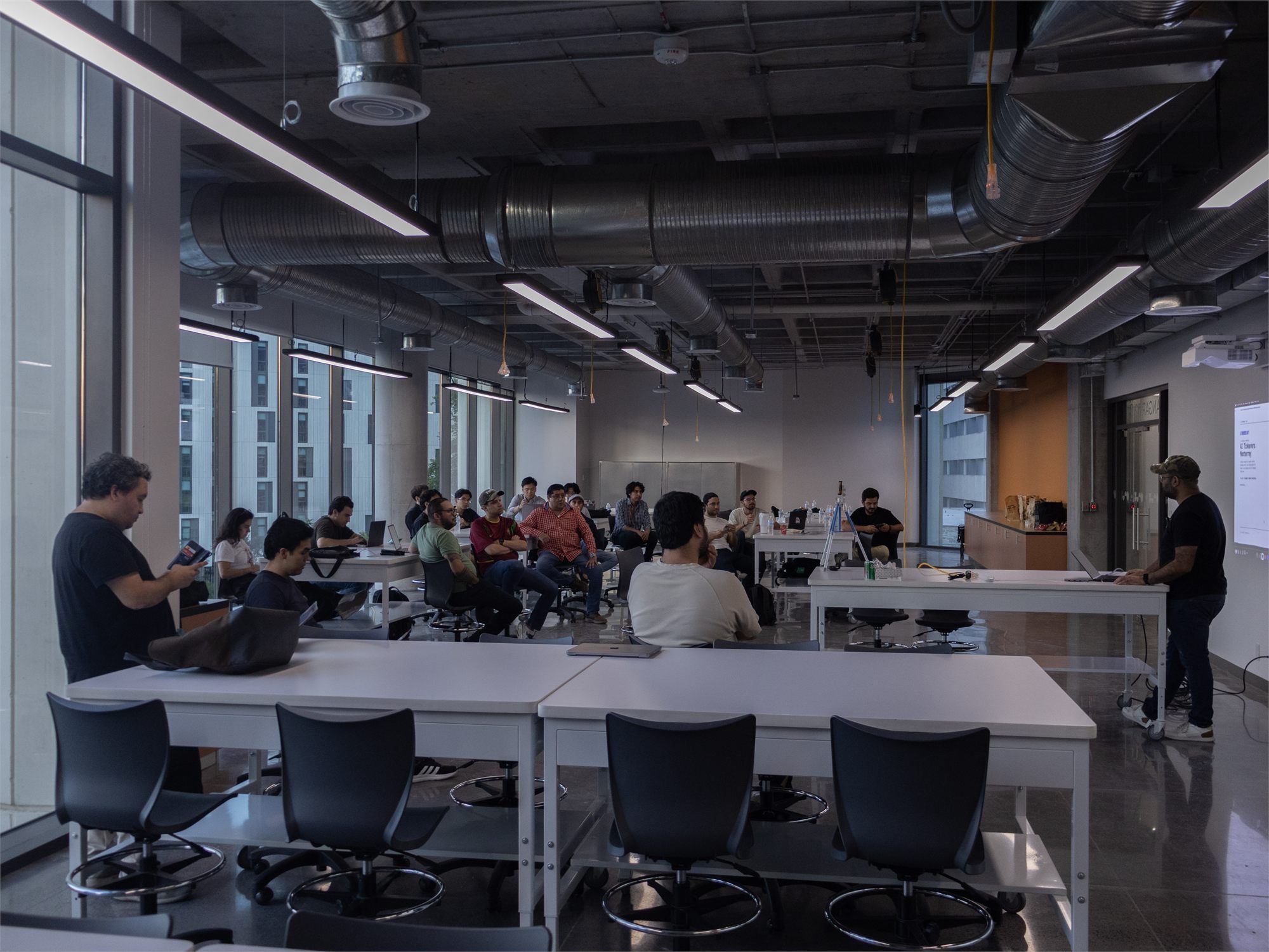
And here you are.
This way of recognizing life, creation, and their relationships is what we call the ontology of Coherence.
We gradually found coherence in that possibility of expressing ourselves, relating to one another, and transforming while preserving meaning and belonging. These words hold something of what we have lived through and remain open to what we can still discover.
Perhaps one of them reminded you of an experience of your own. That recognition has a place here too.
The letter remains open.
For what you recognize.
For what you see differently.
For what we don’t yet know how to name.
What arrives with you can change
what we are able to create together.
With love,
coherence